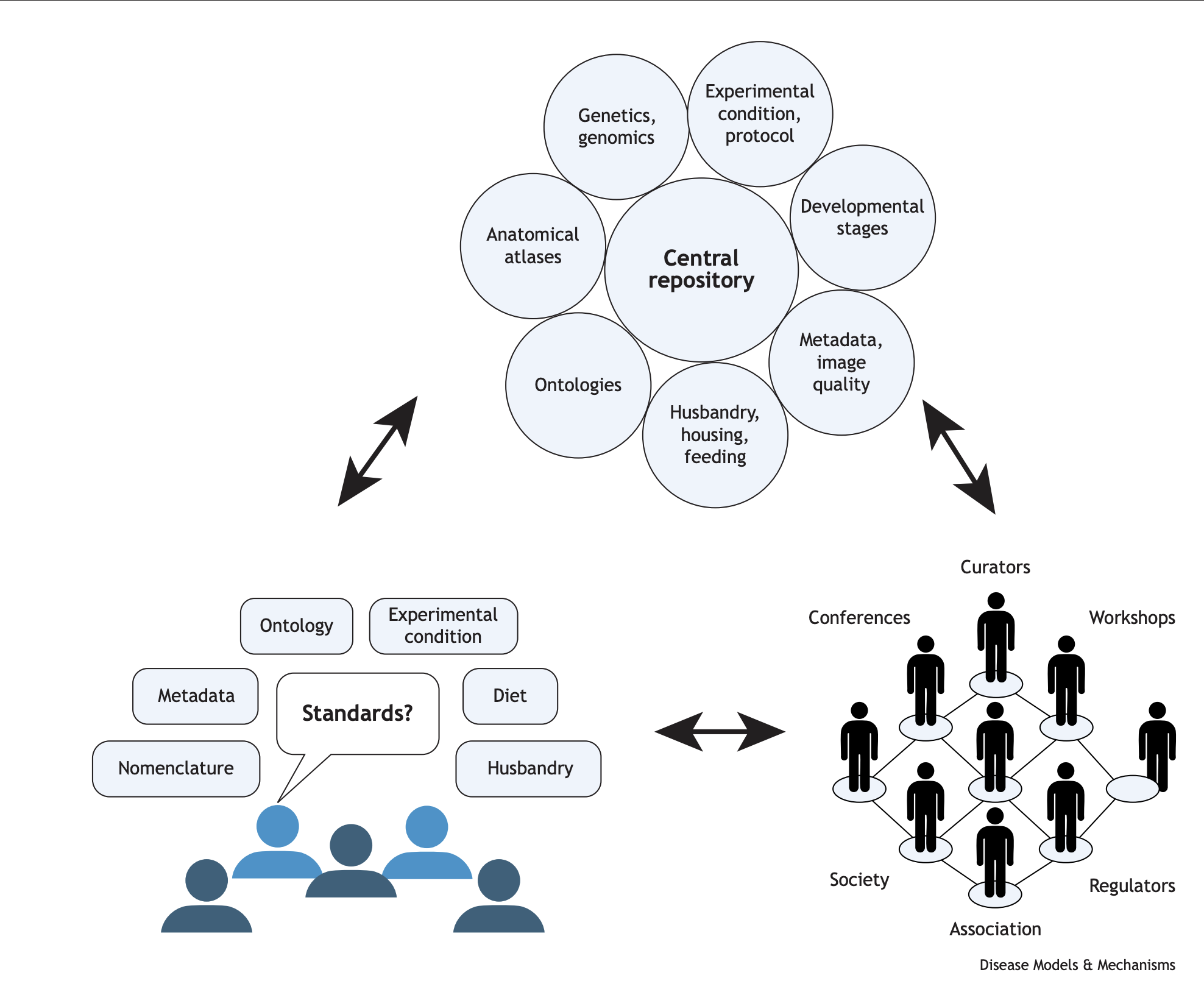
Zebrafish (Danio rerio) is a leading vertebrate model that has greatly advanced research across fields such as developmental biology, toxicology, immunology and genetics. The rapid generation of high-throughput datasets fueled by advances in genomics, imaging and artificial intelligence (AI) has expanded the zebrafish as an animal model for human disease research and therapeutic discoveries. However, the absence of globally adopted, standardized data reporting methods within the zebrafish community undermines data usability, interoperability and reproducibility. Inconsistent documentation of experimental parameters – including genes, alleles, developmental stages and imaging details – creates barriers to integrating and comparing results across laboratories and disciplines. Challenges are especially pronounced for reporting developmental stages, imaging metadata and chemical exposure protocols, impeding robust data integration and reuse. Although resources such as the Zebrafish Information Network (ZFIN) and global initiatives such as the Monarch Initiative promote ontology-driven data standards, widespread implementation remains limited owing to gaps in community awareness and engagement. The use of species-specific and integrative ontologies is essential for unambiguous data annotation and reliable cross-species comparison, particularly in the context of accelerating AI-driven research. In this Editorial, we summarize current standards relevant to the zebrafish field and highlight the urgent need for collective action. Broad community participation in developing, refining and consistently adopting robust data standards will enhance reproducibility, facilitate interdisciplinary collaboration and ensure that zebrafish research remains a pillar for future scientific and AI-powered advances.